At bedsides, in church basements, in apartment kitchens, in hospital rooms, and on bicycles moving through New York streets, another America was doing its part. Family members stayed when others fled. Nurses touched patients when others were afraid to be in the same room. Artists made grief visible. Activists forced institutions to speak, fund, research, and treat.

Pride flags on our SoHo terrace
At God’s Love We Deliver, our answer was food. A meal delivered to someone with AIDS was nutrition, of course. But it was also recognition of basic human dignity. Every meal delivered to someone too ill or too isolated said: You are not untouchable. You are not forgotten. You are not a diagnosis, a risk category, a moral debate, or abandoned. You are a person, and someone is coming to your door with food and love.
Ganga Stone once explained the work plainly: “You can’t comfort people who have not eaten.” That sentence contains a whole philosophy of care. Dignity doesn’t have to be an abstraction; it does have to be practical. It can even just be something as simple as lunch.
Four decades later, the crisis has changed, as has the work of God’s Love We Deliver, but the moral questions remain. What do we owe people living with serious illness? What do we owe those who are isolated, hungry, and scared? What do we owe people whose struggle is easy for others to ignore?
Across New York City, those same questions are still being answered by organizations born in the early years of the AIDS crisis. GMHC turned fear and misinformation into testing, prevention, advocacy, and housing support. ACT UP forced government, medicine, and the pharmaceutical industry to move faster, speak more honestly, and treat people with AIDS as active partners rather than passive victims. Callen-Lorde helped build community-based HIV care rooted in dignity and access. Bailey House, Housing Works, and Harlem United insisted that housing, health care, legal support, and anti-stigma work are parts of the same fight for survival.
Together, these organizations remind us that the answer to abandonment was never one service alone; it was a whole infrastructure of care, protest, memory, and love.
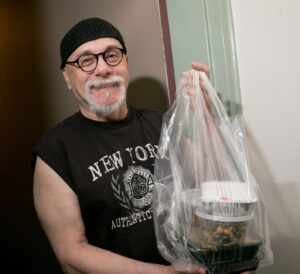
Our client, Mark
The anniversary of that first CDC report should not be treated merely as a medical milestone. It is a civic anniversary, too—a reminder of what communities can build in the face of seemingly impossible obstacles.
A meal by itself cannot cure a serious illness. But it can affirm dignity and remind people living with the dual crises of hunger and illness that they are not forgotten, and send a powerful message to policymakers that medically tailored meals are worth investing in because human lives are worth investing in. That is where justice begins.
As we head into Pride weekend and Sunday’s March, we remember and celebrate all those who have been affected by HIV/AIDS, those who have done so much to change the face of the epidemic, and our LGBTQ+ community members. We love you!


