Breastfeeding has multiple benefits for parent and baby! The World Health Organization (WHO) recommends that babies are exclusively breastfed for the first 6 months of life. After 6 months, continue breastfeeding your baby along with the introduction of complementary foods. Breastfeed up to two years and beyond as desired by the breastfeeding parent and baby. Check out the following tips and resources for a successful breastfeeding journey.
Benefits of breastfeeding for the parent:
- Supports recovery after labor
- Encourages bonding between parent and baby
- Reduces the risk of type 2 diabetes
- Reduces the risk of some types of cancers including ovarian and breast cancer
- Breastfeeding is free and can help save money
- Breastfeeding is convenient
Benefits of breastfeeding for baby
- Colostrum or “liquid gold,” the first breast milk, provides baby with nutrients and antibodies necessary during the first days of life
- Breast milk is easier to digest than standard infant formula
- Reduces the risk of ear infections, sudden infant death syndrome (SIDS), overweight and obesity, and diabetes
Tips for successful breastfeeding
- The Golden Hour: If possible, begin breastfeeding your newborn within the first hour of birth.
- Practice skin-to-skin: Holding your baby against your bare chest for skin-to-skin contact helps parent and baby bond. It helps with the release of oxytocin, which can help with breast milk flow.
- Breastfeed on demand: Breast feed your baby as much and as often as they want. This will also help establish your milk supply. Newborn babies may feed 10-12 times within 24 hours.
- The breastfeeding parent’s nutrition matters: Your nutrient needs increase if you are exclusively breastfeeding. Support postpartum recovery and breast milk production by eating 3 meals plus snacks each day. Drink plenty of fluids and keep a water bottle handy. Speak to your provider to see if it is recommended to continue taking prenatal vitamins.
- Infant feeding cues: Place your baby on your skin or breast when they show early signs of hunger. Once baby is crying, it may be harder for them to latch.
- Signs of hunger include:
- Putting their hands to their mouth
- Suckling on hands
- Turning their head to look for the breast
- Lip smacking
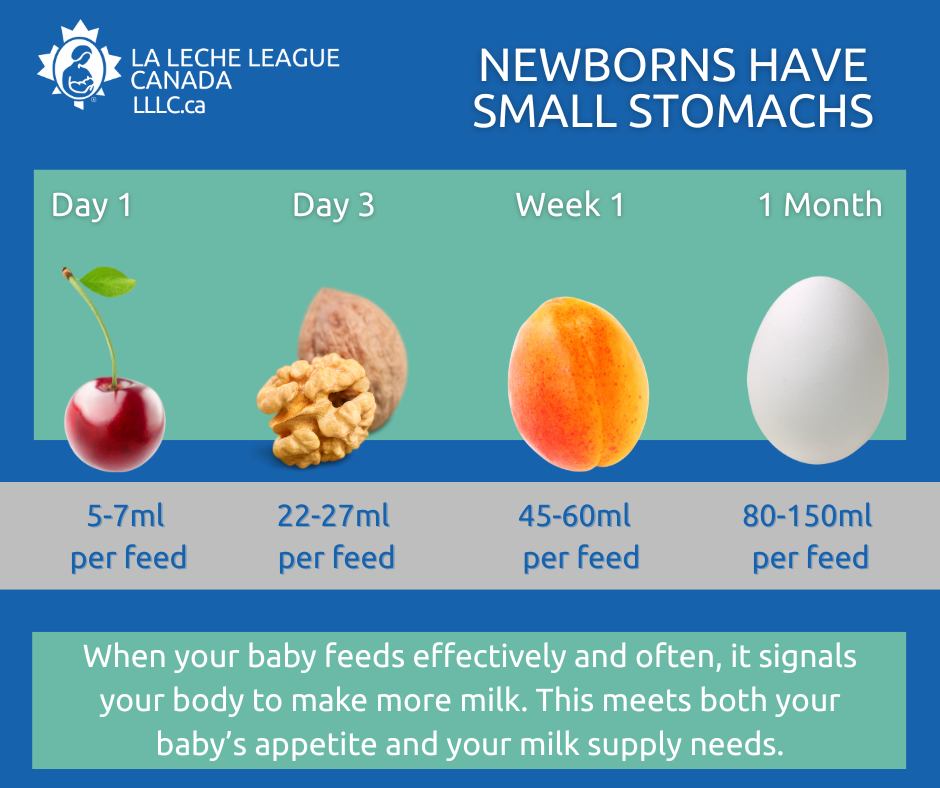
- Baby tummy size: Your baby’s stomach is the size of a cherry at one day old! Your baby will drink about 5-7ml (about 1 teaspoon) per feeding session. As you feed your baby on demand, your milk supply will also increase. You will know that your baby is getting enough breast milk if they are steadily gaining weight and having enough wet/soiled diapers. Be sure to check in with your baby’s pediatrician if you have any questions or concerns about your baby’s growth.
- The parent’s comfort matters! Every baby is different. Parent and baby are both learning when first starting to breastfeed. If you experience discomfort or pain, reach out to a certified lactation consultant (CLC) or International Board Certified Lactation Consultant (IBCLC) for additional support with latching, breastfeeding positions, and other breastfeeding concerns.
If you have any questions about nutrition during breastfeeding or need help with finding additional resources, reach out to your God’s Love RDN. Remember that breastfeeding is a personal choice that may or may not be appropriate for you and your baby. No matter how you feed your baby, you are doing a great job!
Resources for Parents:
For more tips and info on other nutrition topics, visit www.glwd.org/nutrition


